Plan your App's client-server networking API
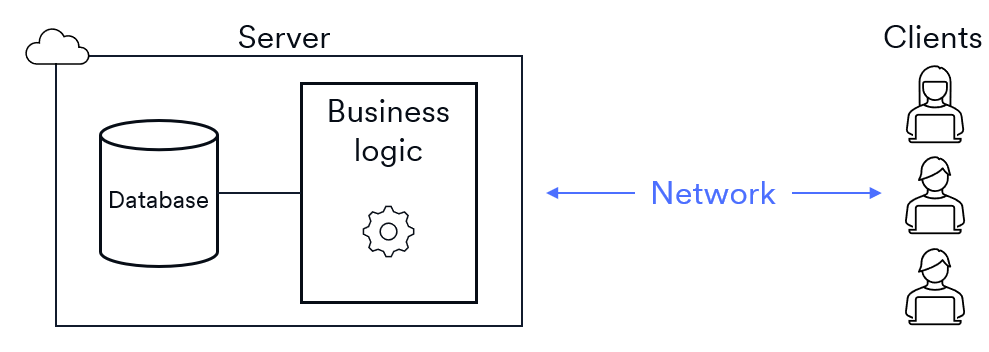
Root Apps follow a client-server model with a thin client. Your server does most of the work and is the source of truth for all data. You define a networking API, so clients can send actions to the server and receive updates in return.
By the end of this article, you’ll be able to:
- Identify your request-response methods
- Identify your broadcast methods
- Group methods into services
How Root’s client-server model works
Root Apps have three main parts that you'll code:
- Client – Runs inside Root on the member’s device and handles the UI and user input. It sends requests to the server and listens for broadcasts.
- Networking – Your client-server API. Root handles the transport, so you don’t worry about connections, routing, or serialization.
- Server – Runs in the Root cloud and handles all logic and data storage. It serves a single community; every client in that community talks to the same server.
In this article, we'll discuss the networking portion of your App.
Plan your networking API
Root supports two communication patterns: request-response and broadcast, and you'll need both in your App. We'll use two example Root Apps throughout this article to illustrate the patterns:
- SuggestionBox: lets members post and vote on ideas.
- Poker: models a turn-based card game with complex state and real-time events.
Request-response methods
In this pattern, the client starts the conversation:
- The client sends a request.
- The server handles the request, often by updating or reading data.
- The server sends back a result or an error.
To design your methods, start with the data the client needs when it starts. For example, it's common to have a list() or getAll() method that the client calls when it launches. Next, map each user action to a request-response method.
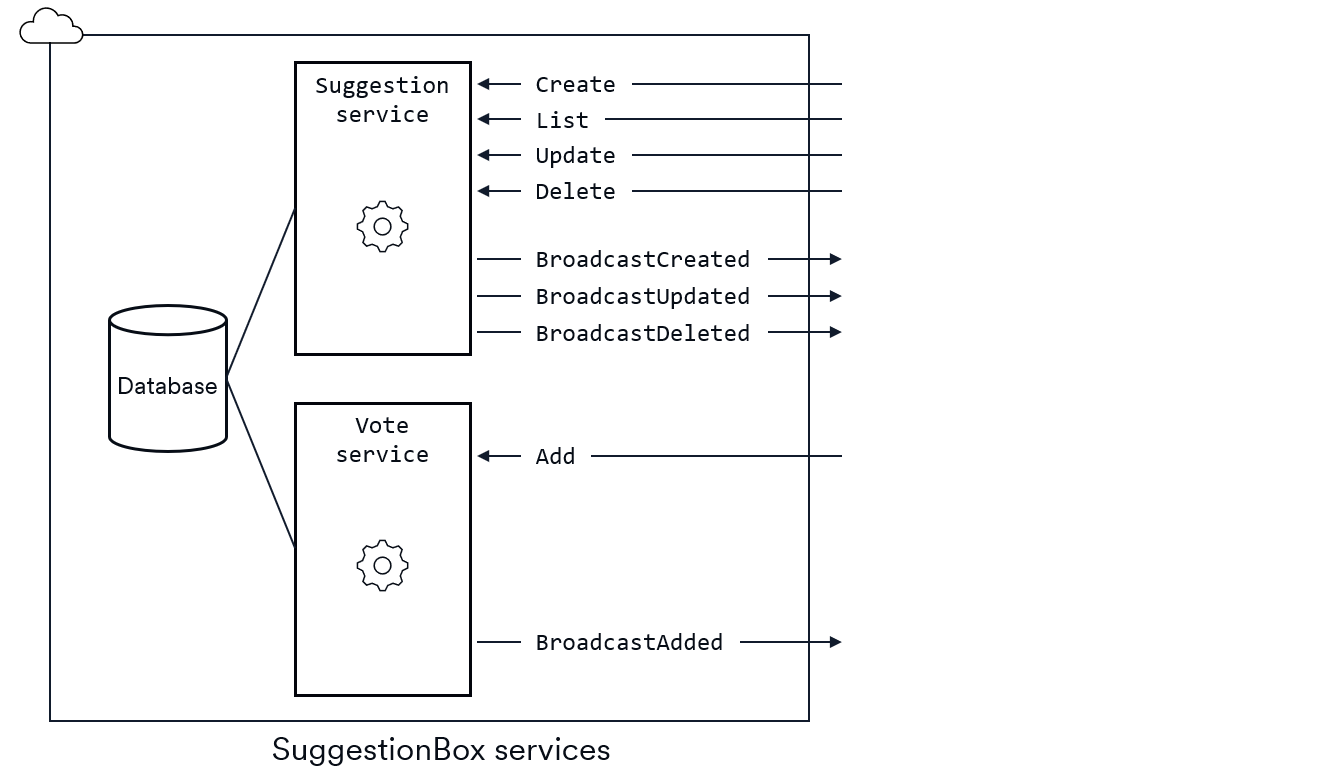
In SuggestionBox, the users can add new suggestions, edit/delete their own suggestions, and vote on their favorites. You'd create a request-response method for each of these actions. In addition, you'd want to provide a list() method the clients use to fetch all current suggestions at startup.
The Poker App is similar: every game action—join a table, place a bet, draw a card—triggers a request to the server, and you'd want a method to support each.
Broadcast methods
In this pattern, the server pushes updates to clients:
- You decide when to broadcast—typically after a client action or when a timer expires.
- You pick the audience: everyone, a filtered group, or everyone except a few.
- Root sends the message to those clients; you don't need to write the broadcast logic or code.
In SuggestionBox, the server uses broadcast methods to keep all clients in sync with new suggestions and new votes. For example, when someone adds a new suggestion, the server broadcasts it to all other clients, so the new suggestion appears on everyone's screen. Voting uses the same pattern: when someone votes on their favorite suggestion, that update is broadcast to all other clients.
The Poker App is similar in that the server uses broadcast to ensure all players see the up-to-date state of the game. For example, after a player draws a card or places a bet, the server broadcasts the update so all players can see the correct game state.
Organize your methods into services
Keep things clean by grouping related methods into logical services. It's typical for a single Root App to have multiple services, each tightly focused on one area. In the SuggestionBox example, you'd likely have two services: one for suggestions and one for voting.
Conclusion
Whether you're building a collaborative tool like SuggestionBox or a real-time experience like Poker, a well-structured networking API will make your App easier to evolve as it grows. Identify your requests and broadcasts, group your methods into focused services, and let Root handle the rest.